
Battery storage — keep more of your own solar.
Without a battery, most homes only use about 30% of their own solar — the rest gets sold cheap and bought back expensive. A properly sized battery flips that to 70–80%, which is where the real savings live.
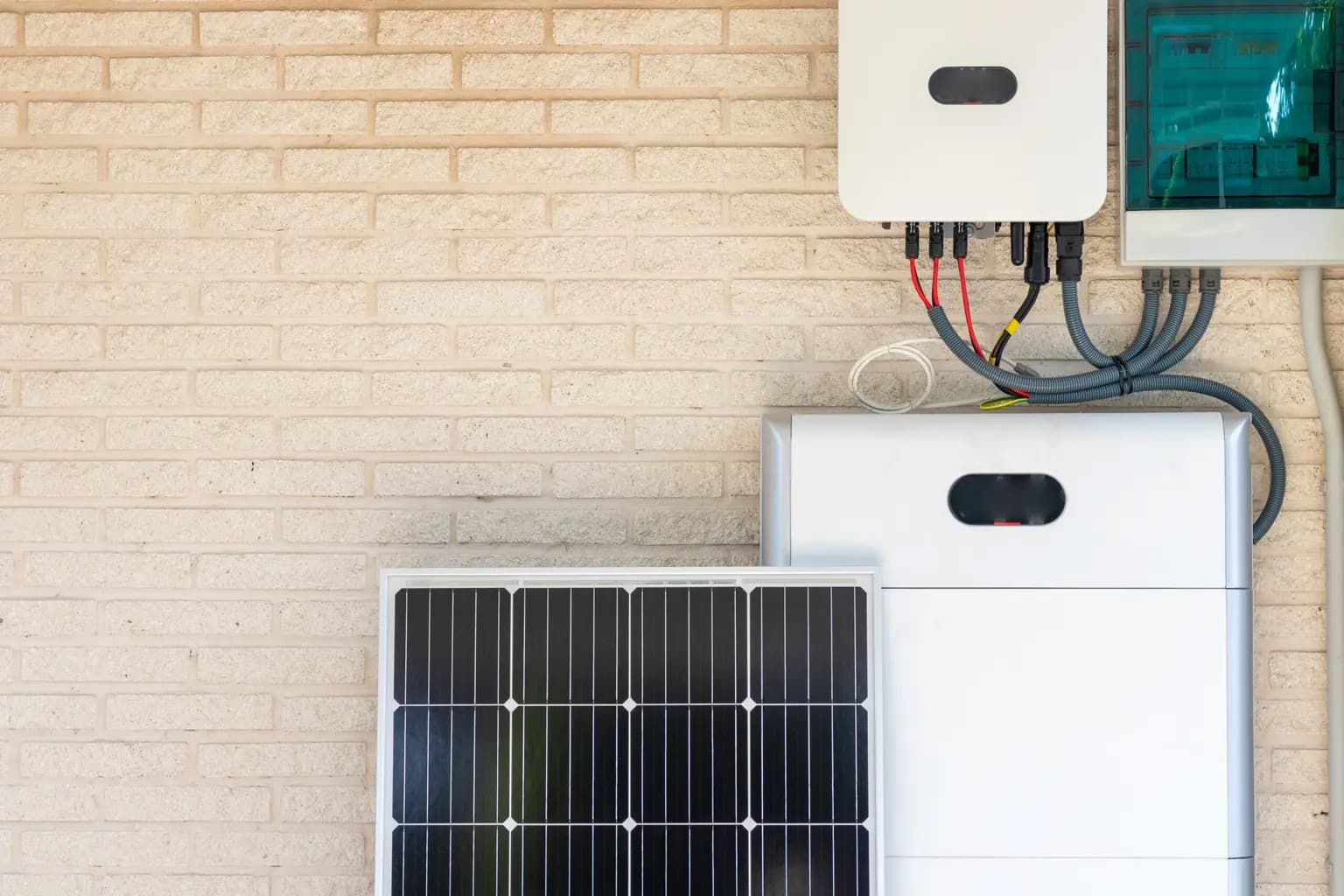
The single biggest lever on solar payback.
Solar without a battery is half the story. The battery is what stops you giving away your generation at 5p/kWh and buying it back at 25p/kWh in the evening.
Self-consumption to 70–80%
From the typical 30% solar self-use to most of what you generate going into your own home instead of the grid.
Cheap-rate top-ups
Pair with a smart tariff like Octopus Go or Cosy and the battery fills off off-peak power for use at peak times.
AC or DC retrofit
We fit batteries to existing solar systems too — whatever your current inverter is, we'll find the right approach.
Tier-1 LFP cells
We specify lithium iron phosphate batteries — safer chemistry, longer cycle life, easier to live with than older lithium-ion options.
Smart EV integration
Battery + solar + EV charger working together: car charges off your stored solar overnight, on a time-of-use tariff.
Real warranty cover
10-year warranty on cells from the manufacturers we use, and we register every install for you.
Battery storage — frequently asked
Almost always yes — we fit batteries to systems we didn't originally install regularly. We'll check your inverter type first (some need a separate battery inverter, some have integrated battery ports) and quote either an AC-coupled or DC-coupled retrofit.
For most homes a 5–10 kWh battery covers the gap between solar generation and evening usage. EV households and bigger homes often go to 10–15 kWh. We size it against your actual consumption profile, not a one-size-fits-all default.
Modern lithium iron phosphate (LFP) batteries are typically warrantied for 10 years and 6,000–10,000 cycles. After 10 years they'll usually still hold 70–80% of their capacity.
Only if it's specifically wired for backup — many standard installs aren't, because backup-capable systems cost more and need additional gateway hardware. We'll talk you through the trade-off if it matters to you.
Battery storage in your area
We're based in Leeds and cover the whole of Yorkshire from there. Click your nearest town below for a local-specific guide.
- Battery storage in LeedsWest Yorkshire
- Battery storage in BradfordWest Yorkshire
- Battery storage in SheffieldSouth Yorkshire
- Battery storage in WakefieldWest Yorkshire
- Battery storage in HuddersfieldWest Yorkshire
- Battery storage in HalifaxWest Yorkshire
- Battery storage in HarrogateNorth Yorkshire
- Battery storage in YorkNorth Yorkshire
Ready for a friendly chat about solar?
No hard sell, no pressure. We'll talk through your roof, your bills and your options, then send a clear written quote.